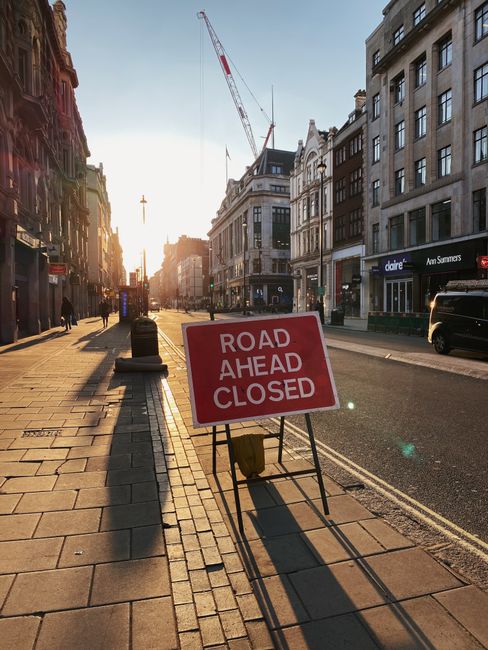
Road Closure, Suspensions & Removals: Highbury Council Rules
If you are planning a move, a delivery, or a bulky furniture collection in Highbury, road closures and parking suspensions can turn a simple job into a very awkward one. One minute you have a clear loading bay; the next, there is a temporary restriction, a diversion, or a suspended parking space right where your van was meant to stop. That is where understanding Road Closure, Suspensions & Removals: Highbury Council Rules really matters.
This guide explains the practical side of managing removals around local restrictions, what the rules usually mean in real life, and how to avoid last-minute stress. It is written for anyone arranging a home move, office relocation, furniture pickup, or van-based delivery where access might be affected. And yes, it can save you from the classic "we thought we could stop there for five minutes" problem. Let's face it, that rarely ends well.
Below you will find a clear breakdown of how road closures and suspensions affect removal work, the most useful steps to take, and the mistakes people make when they leave access planning too late. There is also a checklist, a comparison table, and a set of FAQs for the questions people actually ask when the moving day clock starts ticking.
- Why road closure, suspension and removal rules matter
- How the process works in practice
- Key benefits and practical advantages
- Who this is for and when it makes sense
- Step-by-step guidance
- Expert tips for better results
- Common mistakes to avoid
- Tools, resources and recommendations
- Law, compliance, standards and best practice
- Options, methods and comparison
- Case study or real-world example
- Practical checklist
- Conclusion
- Frequently asked questions
Why Road Closure, Suspensions & Removals: Highbury Council Rules Matters
Most removal delays do not start with the furniture itself. They start with access. A suspended bay, a road works order, a temporary closure outside a terrace, or even a narrow street full of resident parking can change the whole shape of a move. In a busy London area, that matters more than people think.
For home moves, a missed suspension can mean your removal vehicle has to park far away, which increases carrying time and the chance of damage. For office relocations, it can delay the whole timetable and disrupt staff, landlords, building managers, and whoever is waiting for the lift booking. For a single sofa pickup, it may just mean the team cannot stop near the entrance at all. Small issue, big inconvenience.
When people talk about Highbury Council rules in this context, they are usually referring to the local access restrictions, temporary traffic controls, parking controls, and permit-related considerations that affect removals and deliveries. The exact rule depends on the street, the date, the type of vehicle, and the scale of the job. In other words: there is no one-size-fits-all answer.
That is why planning ahead is not just tidy administration. It is operational common sense. A good move is often won in the details you barely notice on the day: kerb access, loading time, where the van can safely wait, and whether the street can physically take the vehicle you have booked. If you already know you will need a larger vehicle, it is worth reviewing options such as a moving truck or even removal truck hire early, before access becomes the limiting factor.
How Road Closure, Suspensions & Removals: Highbury Council Rules Works
In practical terms, this topic sits at the intersection of street access, parking control, and move planning. A council may temporarily suspend parking bays, restrict access to a road for works or events, or introduce conditions that affect stopping, loading, or unloading. Removal crews then have to work around those restrictions legally and safely.
The process usually looks something like this:
- Check the street conditions early. Before moving day, look at the route, the property frontage, and any signs or notices on the road.
- Identify loading points. Work out where a vehicle can stop without blocking traffic, driveways, cycle lanes, or access for neighbours.
- Confirm whether a suspension or closure affects your slot. A temporary suspension can remove access you were expecting, while a closure may change the whole route.
- Match the vehicle to the street. A narrow residential road may suit a smaller vehicle and a more flexible loading plan, while a large move may need a bigger truck and more careful placement.
- Allow extra time. Even when everything is in order, access can still be slower than expected. People, bins, delivery vans, and builder materials have a habit of appearing at the worst time.
The key thing is that removals are rarely just about lifting boxes. They are about controlling the movement around the property. If a road closure or suspension is active, the crew may need to park further away, use more portering time, or adjust the vehicle size. For larger properties, it may make sense to combine access planning with packing support through packing and unpacking services so the move is less frantic on the day.
One small but important point: a suspension or closure does not always mean the whole street is unusable. Sometimes it only affects one side, one bay, or a time window. That said, relying on guesswork is risky. A five-minute assumption can become a one-hour headache. Human nature, eh?
Key Benefits and Practical Advantages
Working around road restrictions properly is not just about staying on the right side of the rules. It makes the move smoother, safer, and usually cheaper in the long run because fewer delays mean less labour time and less stress.
- Less risk of fines or enforcement issues. Stopping where you should not can cause avoidable trouble.
- Better timing. A move that starts on schedule is usually a calmer move all round.
- Reduced carrying distance. The closer the vehicle can get, the less heavy lifting across pavements and entrances.
- Lower damage risk. Fewer long carries mean fewer knocks to furniture, walls, and stair edges.
- More accurate pricing. Access-aware planning helps removal teams quote and schedule more realistically.
- Less disruption to neighbours. Clear access plans reduce blocked driveways and awkward reversing.
For many households, the real benefit is peace of mind. You know the van can get close enough. You know the crew is not improvising in the road. You know the job is not going to unravel because of one missing detail. That calm feeling is worth a lot on moving day, especially when the kettle is packed and nobody can find the scissors.
If you are moving a home, a smaller and more agile service such as man and van or man with van may be suitable when road conditions are tight. For bigger household moves, a dedicated team like home moves or house removalists can help organise access more methodically.
Who This Is For and When It Makes Sense
This topic is relevant to far more people than you might expect. If your move involves a road, a bay, a narrow frontage, or a time-sensitive collection, it probably applies to you.
- Home movers who need the vehicle close to the property.
- Flat movers dealing with limited loading space or shared access.
- Office managers coordinating a relocation with building access windows.
- Landlords and agents arranging end-of-tenancy removals or clearances.
- Furniture buyers and sellers needing a careful pickup from a street with restrictions.
- Small business owners moving stock, fixtures, or equipment.
- Anyone using a larger van or truck where stopping space is limited.
It makes the most sense to think about road closures and suspensions as part of the move plan, not an afterthought. If you only discover a restriction when the vehicle arrives, you have already lost flexibility. And in a place like Highbury, flexibility is usually the thing that saves the day.
Commercial users should pay particular attention. An office relocation can be affected by building rules, business hours, lift bookings, and curb access at both ends. Services like commercial moves and office relocation services are especially useful when timing is tight and the stakes are higher than a standard domestic move.
Step-by-Step Guidance
Here is the simplest sensible way to handle a move where road closure or suspension rules may matter.
- Start with the property and street layout. Look at the road width, the frontage, nearby junctions, and any obvious restrictions.
- Check for temporary notices. Any sign of works, event restrictions, or parking changes needs attention early.
- Estimate your loading requirement. Ask yourself: do you need a small van, a larger truck, or a hybrid approach with shuttle runs?
- Choose the right move type. If access is awkward but the load is modest, a flexible vehicle may be better than a big truck. If the job is extensive, a planned team and larger vehicle may still be best.
- Protect the route inside the property. Hallways, stairs, lifts, and door frames matter just as much as the road outside.
- Build in timing margin. Add buffer for congestion, neighbour parking, and the odd unavoidable delay.
- Confirm the final plan before move day. A quick final check can save a messy morning.
For awkward or bulky items, a structured pickup service such as furniture pick up can be a better fit than trying to improvise with a vehicle that is too large for the street. A smaller, well-judged load is often easier to manage than a grand plan that collapses under the weight of reality.
If you are packing at the same time, keep the front-to-back logic of the vehicle in mind. Heavy items first, fragile items protected, and a clear path to the door. Sounds obvious, but on a foggy Tuesday morning with tape missing and someone calling about the lift, obvious things are exactly what get forgotten.
Expert Tips for Better Results
After plenty of moving days, one pattern keeps showing up: the moves that feel easy are usually the ones where access was handled early and plainly. No drama. No heroic improvisation.
- Measure the route, not just the room. Doorways, stair corners, kerbs, and entrance steps matter more than many people expect.
- Take photos of the street. Even a simple picture can help identify where a vehicle can reasonably stop.
- Prepare two plans. A "best case" and a "if the bay is gone" plan is often enough to prevent panic.
- Keep key items separate. Documents, keys, chargers, and first-night essentials should never get buried in the load.
- Use the smallest practical vehicle. Bigger is not always better if the road is tight.
- Tell the crew about anything awkward. A narrow gate, low branch, or steep step is not a surprise; it is a detail.
One thing to remember: road access is not just a legal issue. It is a workflow issue. If the vehicle has to sit half a street away, every box takes longer. If the pavement is uneven, your team slows down. If the loading window is short, every minute matters. That is where experience really helps.
And yes, occasionally the "we'll just wing it" approach sounds tempting. It also tends to cost more. Funny how that works.
Common Mistakes to Avoid
The biggest mistakes are usually not dramatic. They are simple, believable oversights made under pressure. That is why they happen so often.
- Leaving access checks until the day before. By then, options are already limited.
- Assuming one street is the same as another. In London, two very similar roads can have completely different restrictions.
- Booking the wrong vehicle size. Too large can be awkward; too small can mean repeat trips.
- Ignoring building or estate rules. External road access is only half the story.
- Not allowing for parking displacement. Even legal parking may still be inconvenient if it is far from the entrance.
- Forgetting the return journey. Delivery or collection access can be different from departure access.
A common one is underestimating how much extra handling time a blocked road creates. A move that should have felt smooth suddenly becomes a series of short carries, door holds, and careful lifts. The work is still manageable, but the rhythm changes. That is often what people do not plan for.
Another mistake is assuming that all removals are the same. They are not. A single sofa, a one-bedroom flat, and a commercial office do not need the same access strategy, the same vehicle, or the same level of scheduling control.
Tools, Resources and Recommendations
You do not need a complicated system to stay organised. A few practical tools are usually enough.
- A simple site note. Write down the address, access point, parking options, and any known restrictions.
- A phone camera. Photos of the frontage, street signage, and loading area are genuinely helpful.
- A moving inventory. Knowing what is being moved helps decide whether a van or truck is more suitable.
- Basic packing supplies. Good boxes, tape, labels, and blankets reduce handling problems later.
- Dedicated removals support. For larger jobs, professional help saves time and reduces avoidable guesswork.
If you want to keep the move tight and practical, the combination of proper packing and the right vehicle matters a lot. For example, packing and unpacking services can make a major difference when time is limited and access is not ideal. Likewise, using the correct moving truck can help you fit the job to the street, rather than forcing the street to fit the job.
For bigger, more complex moves, especially where timing and property access are both sensitive, it can be worth speaking to a team with real removals experience. If you need a starting point, the main site at Highbury Self Storage is a useful place to orient yourself before making decisions.
Law, Compliance, Standards, or Best Practice
Road closures, traffic management, and parking suspensions can be affected by council decisions, local traffic orders, and temporary site-specific restrictions. The details vary, and you should always confirm what applies to your street, property, and date rather than relying on assumptions.
From a best-practice point of view, the main duties are straightforward:
- Do not obstruct traffic or emergency access.
- Do not stop where signs or restrictions prohibit it.
- Plan loading so it can happen safely.
- Respect neighbours, residents, and building rules.
- Use suitable vehicles and competent handling methods.
In the UK, removals and delivery work is typically expected to be carried out with reasonable care, clear communication, and attention to safety. That means securing items properly, keeping routes clear, and not forcing a vehicle into a space that is obviously unsuitable. A good move is rarely the one that takes the biggest shortcut.
If you are arranging a commercial move, this becomes even more important because you may also need to think about staff access, building management, service entrances, and business continuity. A well-managed move is not only compliant; it is calmer. And calmer is good.
Options, Methods, or Comparison Table
Different access situations call for different approaches. Here is a simple comparison to help you think it through.
| Approach | Best for | Strengths | Limitations |
|---|---|---|---|
| Small van / flexible load | Narrow streets, short pickups, limited stopping space | Easier to park, quicker to reposition, often less disruptive | May require more trips if the load is large |
| Medium or large moving truck | Substantial home or office moves | More capacity, fewer trips, better for organised loading | Needs more careful access planning |
| Man and van service | Smaller moves or mixed access situations | Flexible, practical, often ideal when road space is tight | Not always the best choice for very large households |
| Full removal team | Whole-house or office relocations | Better coordination, more handling support, less stress | Can be more complex to schedule if access is uncertain |
The right option depends on the street, the load, and how much time you have to work with. A road closure can nudge you toward a smaller vehicle; a strict time window might push you toward a more organised crew. There is no perfect answer every time, but there is usually a sensible one.
Case Study or Real-World Example
Consider a fairly ordinary scenario: a two-bedroom flat move from a Highbury side street on a weekday morning. The occupier had booked a larger vehicle because the furniture list looked substantial. On paper, that made sense. In practice, the street had limited kerb space and a temporary parking suspension was already in place near the entrance.
Rather than forcing the vehicle into a bad spot, the move was reworked around access. The team used a more flexible loading point slightly further along the road, adjusted the timing so they could avoid the peak disruption, and packed the most fragile items separately. No drama, no rushed shouting across the pavement, just steady progress. A little boring, honestly. Which is exactly what you want on moving day.
The important lesson was not that the move was unusual. It was that the restriction changed the whole job shape. If they had ignored the suspension, the move would have taken longer and likely caused more friction with residents. Because they planned around the access issue, the day stayed orderly.
That same logic applies to furniture pickup and office work. A sofa collection that looks simple can become awkward if the only loading point is unavailable. An office move can become messy if a service entrance is blocked. Small access facts, big consequences.
Practical Checklist
Use this checklist before moving day. It is not glamorous, but it is effective.
- Confirm the full address and exact loading side.
- Check for any temporary road closure, suspension, or restriction.
- Identify the best place for the vehicle to stop.
- Decide whether a van, truck, or full removal team is most suitable.
- Review building rules, lift access, and entry times.
- Pack and label items so unloading is quick and sensible.
- Set aside essentials you will need immediately.
- Allow extra time for street access, neighbour traffic, and delays.
- Keep a backup plan if the preferred loading spot is unavailable.
- Double-check contact details for the day.
Practical summary: if road access looks uncertain, plan earlier, choose the vehicle more carefully, and keep the loading process simple. Those three things solve a surprising number of problems.
Conclusion
Road closure and suspension rules can seem like background noise until they directly affect your move. Then they become the whole story. The good news is that with a little planning, you can work around most access issues without drama. Check the street, match the vehicle to the conditions, leave room for delays, and keep the job realistic.
Whether you are moving a home, relocating an office, or arranging a one-off furniture pickup, the aim is the same: keep the day calm, legal, and efficient. That is what good removals planning looks like in practice, and it is worth the effort every single time.
If you are arranging a move and want to keep the process straightforward, take a moment to review the service options that fit your situation best, then plan the access around them rather than the other way round. A little care now can save a lot of heavy breathing later.
Get a free quote today and see how much you can save.
And if nothing else, remember this: the road may be complicated, but your move does not have to be.
Frequently Asked Questions
What do road closure, suspension and removal rules usually mean for a move?
They usually refer to temporary access limits that affect where a vehicle can stop, load, unload, or pass. For removals, that can change timings, vehicle choice, and how far items must be carried.
Do I need to plan for parking suspension before my moving day?
Yes, if your street is likely to be affected. A parking suspension can remove the exact space you were counting on, so checking early is much safer than hoping for the best.
What happens if the road outside my property is closed on the day?
The move may need to be adjusted so the vehicle loads from a different point, uses a smaller nearby space, or changes timing. In more difficult cases, the whole plan may need rescheduling.
Is a man and van service better for streets with restrictions?
Often, yes, especially for smaller loads or tight residential streets. A more flexible vehicle can be easier to position when access is limited.
How do I know whether I need a moving truck instead of a van?
Think about the volume of items, the number of trips, and how much space the street allows. If the street is restrictive but the load is large, you may need expert advice on balancing access and capacity.
Can road restrictions affect office relocations too?
Absolutely. Offices often involve tighter schedules, building access rules, loading bay bookings, and more people relying on the move happening on time.
What is the biggest mistake people make with road access?
Leaving it too late. People often plan the boxes, the furniture, and the vehicle, but forget the street itself. That is usually where the problems start.
Should I take photos of the street before moving day?
Yes, that is a very sensible move. Photos help show loading points, road width, signs, and any awkward corners or obstructions.
Do I need packing help if the road is restricted?
Not always, but it can help if time is tight or the access window is short. When the loading process needs to be efficient, good packing saves a surprising amount of time.
What if my furniture pickup is only for one or two large items?
Then a flexible collection service may be the best fit, especially if the street is hard to access. Even a small pickup can be slowed down by a suspended bay or narrow frontage.
How much extra time should I allow for a restricted street?
There is no single rule, because every road and property is different. Still, it is wise to build in a buffer rather than assuming loading will happen at the same pace as an unrestricted move.
Where should I start if I want help planning a move around access issues?
Start with the property, the street, and the type of move you need. Then compare the available service options and pick the one that fits the space as well as the load. If you need to speak to someone directly, you can use the contact page on the site.